
When most folks think about strawberries, they picture warm spring days, bright red berries, and homemade strawberry jam. But here's something that might surprise you: fall is one of the best times to plant strawberries in North Carolina!
While the summer garden is winding down and we're pulling up old plants, October is an important time to prepare for next spring's harvest.
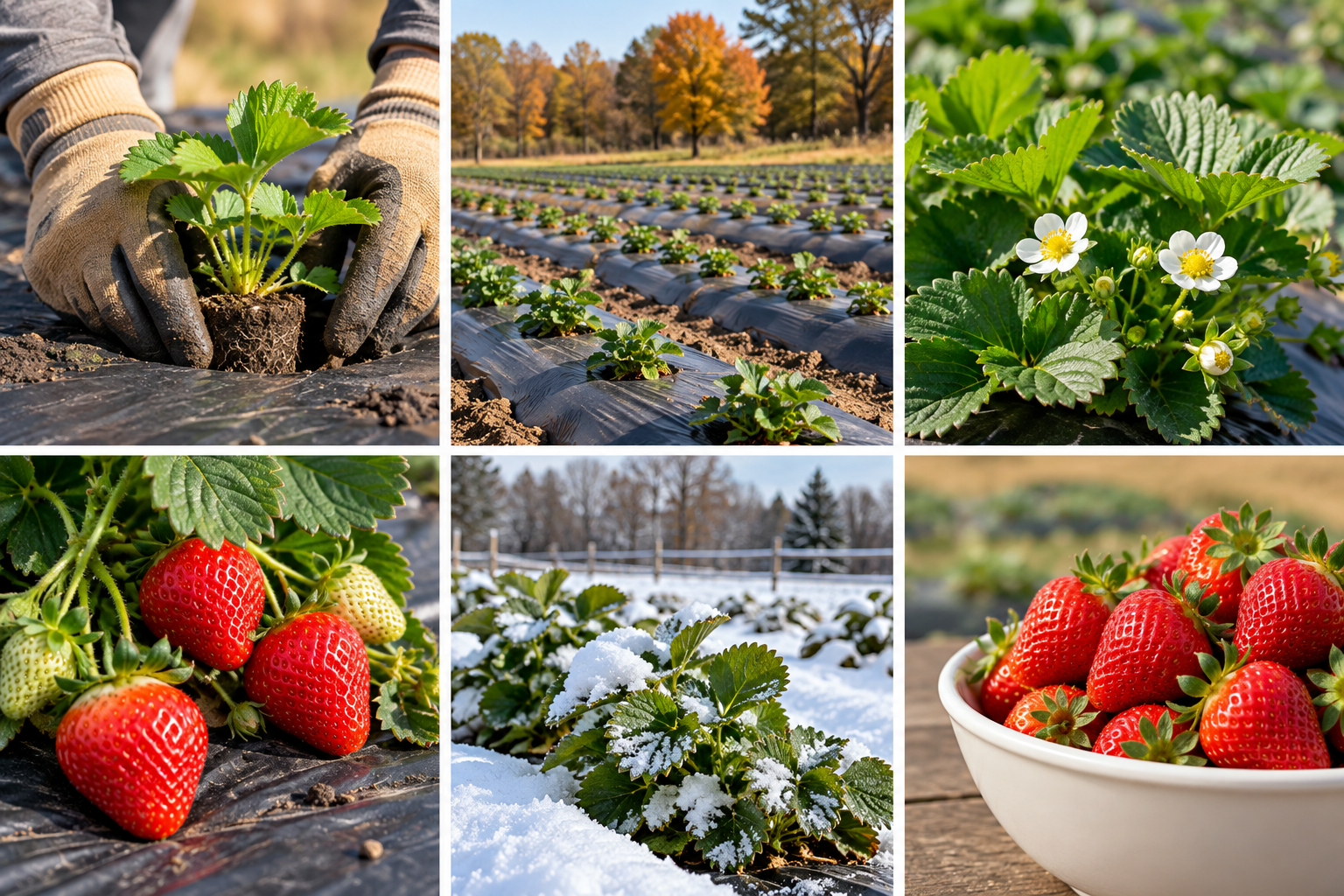
Here at Melton's Produce Shack in Belvidere, North Carolina, we're getting ready to plant 200 strawberry plugs representing four different varieties. We're hoping for a delicious harvest in spring 2027!
Why Plant Strawberries in the Fall?
Strawberries need time to develop strong roots and healthy crowns before they begin producing fruit.
Planting in the fall gives them an opportunity to establish themselves during our relatively mild North Carolina winters.
As the days grow shorter and temperatures cool, June-bearing strawberry plants begin developing the flower buds that will produce next spring's berries.
The secret to a great spring strawberry crop starts months before you ever pick a berry!
Is October Really the Best Time?
It depends on where you live and which strawberry variety you're growing.
In North Carolina, strawberry planting generally takes place from September into October. Growers in cooler regions plant earlier, while some warmer coastal areas can plant later.
Here in northeastern North Carolina, early fall planting gives strawberries more time to establish before winter. Planting dates vary by variety, so it's worth checking local recommendations rather than assuming any day in October will work equally well.
How to Plant Strawberries for Spring
You don't need a large farm to grow strawberries. A small raised bed, a sunny garden row, or even a few containers can provide homegrown berries.
Here's how to get started.
1. Choose a Sunny Location
Strawberries love sunshine! Select a location that receives at least 6–8 hours of direct sunlight daily.
They also need well-drained soil. Strawberries dislike sitting in wet ground, which can encourage root and crown rot.
Ideally, soil pH should be between 6.0 and 6.5. A soil test can help determine whether your garden needs amendments.
2. Prepare Your Beds
We're using raised rows covered with black agricultural plastic mulch.
Why plastic?
- Helps control weeds. - Holds moisture in the soil. - Helps warm the soil. - Keeps developing berries away from bare dirt. - Reduces some problems associated with soil contact.
For a home garden, you can also use raised beds or other suitable mulch materials.
3. Give Your Plants Room to Grow
For strawberries grown on plastic-covered raised beds, a common arrangement is two staggered rows with plants approximately 12–16 inches apart, depending on the variety.
This gives each plant space to develop while making harvesting easier.
4. Don't Bury the Crown!
This is one of the most important strawberry-growing tips.
The crown is the growing point where the roots meet the leaves.
Planting too deeply can cause the crown to rot. Planting too shallowly can leave roots exposed.
Keep the crown at the soil surface, with the roots and plug firmly nestled into the soil.
5. Water Them In
Water your strawberry plants immediately after transplanting.
Keep the soil consistently moist while they establish, but avoid soggy conditions.
Drip irrigation is particularly useful for strawberries grown under plastic mulch.
What Happens During Winter?
You might be surprised how much strawberries can accomplish during the colder months.
Although their visible growth slows during winter, healthy plants can survive the cold and resume vigorous growth as temperatures rise.
We will monitor our plants for moisture, remove unwanted runners after they've established, and watch for signs of disease.
During particularly cold weather, lightweight agricultural row covers may be needed to protect the plants. These covers are especially helpful during spring frosts when strawberry blossoms are vulnerable.
When Will We Have Strawberries?
If everything goes according to plan, we hope to begin harvesting in April or May 2027.
Weather, variety, and growing conditions will determine exactly when the berries ripen.
And while strawberries are wonderful eaten fresh, they're also perfect for homemade jam, strawberry shortcake, preserves, and plenty of other kitchen creations.
Growing More Than Just Food
One of our favorite things about gardening is that every season teaches us something.
Some crops thrive. Others struggle. Sometimes the weather cooperates, and sometimes Mother Nature has completely different plans.
But every seed planted, every garden bed prepared, and every lesson learned helps us become better growers.
At Melton's Produce Shack, we believe growing food should be accessible to everyone. You don't need acres of land or expensive equipment to get started. Sometimes all it takes is a few plants, a little patience, and the willingness to get your hands dirty.
Follow along as we grow our 200 strawberry plants through fall, winter, and hopefully into a beautiful spring harvest!
From our garden to yours,
Melton's Produce Shack Belvidere, North Carolina Growing good food, sharing what we learn, and serving our community.